
If you’re searching for an electrical control panel manufacturer in Nagpur, you’re probably dealing with one or more of these needs: better motor control, safe distribution, power-factor correction, reliable automation, or a compliant upgrade for an industrial/commercial setup. Control panels are not “one-size-fits-all”—the right design depends on your load, supply, protection philosophy, and operating conditions. This guide explains what electrical control panels do, the types commonly ordered in Nagpur, key specifications you should confirm, and mistakes to avoid—so you can make a confident decision. --- What Is an Electrical Control Panel (in Practical Terms)? An electrical control panel is an assembled system of electrical and electronic components housed in a cabinet/enclosure. It coordinates power flow and control signals to operate equipment safely and consistently. Depending on the application, a control panel may include: - Incoming protection (MCB/MCCB/ACB depending on rating) - Contactor starters for motors and loads - Relays (thermal overload relay, protection relays, interface relays) - Busbars and interconnections - Meters/indicators (current, voltage, energy, status lights) - Control wiring and terminals - Control logic (manual, relay-based, or PLC-based systems) - Alarm/feedback mechanisms for critical processes In short: it turns raw electrical supply into safe and controlled operation for your equipment. --- Why “Manufacturing Quality” Matters for Control Panels Many buyers assume any panel that “works” is good enough. But the performance of a control panel is affected by factors you can’t easily see from the outside: Key quality factors to check - Correct component selection (right ratings and proper make/spec) - Reliable wiring practices (proper crimping, ferrules, neat routing) - Heat management (ventilation, cable sizing, enclosure suitability) - Busbar design and current-carrying capacity - Tight terminal connections and proper torque practices - Testing before delivery (continuity, insulation resistance, functional checks) - Documentation (single line diagram, wiring diagram, test reports) A well-manufactured panel reduces: - downtime due to loose connections or thermal issues - recurring failures in contactors/relays - safety risks during operation --- Common Types of Panels People Order in Nagpur Depending on your requirement, you may see (or request) these panel categories: 1) APFC Panel (Automatic Power Factor Correction) Used to correct reactive power and improve power factor, especially in facilities with induction motors and continuous loads. Typical use cases - Industries with high motor load - Workshops and plants aiming to reduce electricity penalties - Places looking to improve system efficiency Important specs to verify - Number and rating of capacitor steps - Contactor/relay selection - Detuning/reactor consideration (to avoid resonance issues) - Control logic and protection for capacitors --- 2) MCC Panel (Motor Control Centre) A centralized panel for controlling multiple motors. Typical use cases - Pumps, HVAC motors, conveyors, and industrial load banks - Facilities needing structured motor starters and monitoring Important specs to verify - Starter types (DOL, star-delta, soft starter, VFD integration) - Individual motor protections and overload relays - Busbar sizing and distribution philosophy - Expandability for future motor additions --- 3) PDB Panel (Power Distribution Board / Panel) A distribution-oriented panel for distributing power to different circuits/load groups. Typical use cases - Buildings, plants, and substations - Feeding lighting circuits, socket circuits, or sub-panels Important specs to verify - Incoming and outgoing protection coordination - Neutral/earth management - Load segregation and labeling --- 4) AMF Panel (Auto Mains Failure) Used to automatically switch to a generator during mains failure. Typical use cases - Hospitals, data/IT setups, industrial control rooms - Any facility where downtime must be minimized Important specs to verify - Transfer mechanism logic and interlocks - Generator start/stop timing - Alarm and status indications - Synchronization handling (where required) --- 5) Street Light / Distribution / Feeder Panel Variants In municipal or infrastructure projects, panels support consistent street lighting control and feeder distribution. Typical use cases - Street lighting systems - Feeder pillars and DTC-style boxes (application depends on project design) - High mast lighting systems (control and protection) --- What Specifications Should You Confirm Before Buying? Whether you’re building a new facility or upgrading an existing one, ask the manufacturer about the following: 1) Electrical ratings - Voltage (e.g., 415V/440V/230V) - Current rating (main incomer and outgoing circuits) - Frequency (50 Hz typically in India) - Short-circuit withstand rating (where applicable) 2) Protection and coordination - Correct MCB/MCCB/ACB ratings - Overload relay settings for motors - Cable sizing and protection selectivity - Earth leakage/earth fault protection requirements (as applicable) 3) Control method - Manual control vs relay-based automation vs PLC/HMI integration - Sequence logic (especially for AMF/MCC/APFC) - Interlocks and safety shutdown logic 4) Enclosure and heat considerations - Suitable enclosure type and ingress protection approach - Ventilation/space for heat dissipation - Cable entry positions and gland selection 5) Testing and documentation A good panel process includes testing such as: - continuity checks - insulation resistance checks - functional verification for starters/logic - documentation like drawings and test reports (as per project needs) --- Installation, Commissioning, and Why It’s Part of “Panel Quality” Even a perfectly manufactured panel can fail prematurely if installation and commissioning are rushed. During commissioning, key focus areas include: - correct termination of all incoming/outgoing cables - verifying earthing/grounding continuity - checking insulation resistance and safe clearances - confirming relay settings and motor direction/sequence - functional testing under real load conditions (where feasible) If you’re coordinating a project in Nagpur, it helps to work with a team that understands both panel manufacturing and site commissioning workflow—especially for motor control, APFC, and feeder/lighting arrangements. --- Common Mistakes People Make When Choosing a Panel Mistake 1: Choosing only by cabinet size A bigger cabinet doesn’t guarantee better performance. What matters is internal design, thermal management, and protection coordination. Mistake 2: Ignoring future expansion If you want added motors/circuits later, ask about modularity and spare capacity. Mistake 3: Skipping documentation/testing Without diagrams and verification, troubleshooting becomes harder and compliance becomes messy. Mistake 4: Underestimating heat and dust exposure Industries and outdoor installations in different zones may require better enclosure suitability and internal spacing. --- Practical Guidance: How to Shortlist a Manufacturer in Nagpur When comparing vendors, you can evaluate them using these practical checkpoints: - Do they ask detailed questions about your load and operating conditions? - Can they provide a clear single line diagram / wiring approach (even at concept stage)? - Do they explain how they handle protection, interlocks, and testing? - Are components selected with correct ratings and coordination? - Can they support installation/commissioning timelines and site readiness? If you’re considering a local option, many project teams in Nagpur prefer working with an established panel manufacturer that can align manufacturing deliverables with site commissioning schedules—some suppliers in the region also handle related electrical works like street lighting and infrastructure cabling as part of project execution. --- Where a Local Panel Manufacturer Adds Value (Nagpur Context) In a city like Nagpur, procurement and project timelines can be affected by logistics, site readiness, and availability of components. A manufacturer that understands local execution—panel design, dispatch timelines, and on-site testing workflow—can reduce delays for: - industrial expansions - plant maintenance upgrades - municipal/infrastructure electrical improvements - control retrofits for aging switchgear --- Final Checklist Before You Place an Order Before signing off on an electrical control panel order, ensure you have clarity on: - Panel type (APFC, MCC, PDB, AMF, distribution/feeder, lighting control) - Ratings (voltage/current, motor HP/kW, capacitor steps, generator timing) - Protection strategy (breakers, overloads, selectivity) - Control logic & interlocks - Enclosure suitability (heat/dust/outdoor considerations) - Testing plan & documents - Installation/commissioning responsibility --- If you want, tell me your application details (panel type you need, voltage, number of motors/circuits, any generator requirement, and whether it’s indoor or outdoor). I can suggest a spec checklist you can use when discussing with an electrical control panel manufacturer in Na


This is your website preview.
Currently it only shows your basic business info. Start adding relevant business details such as description, images and products or services to gain your customers attention by using Boost 360 android app / iOS App / web portal.
Electrical Control Panel Manufacturer in Nagpur: How to Choose the Right Panel (and What to Expect)
2026-10-07T02:30:38
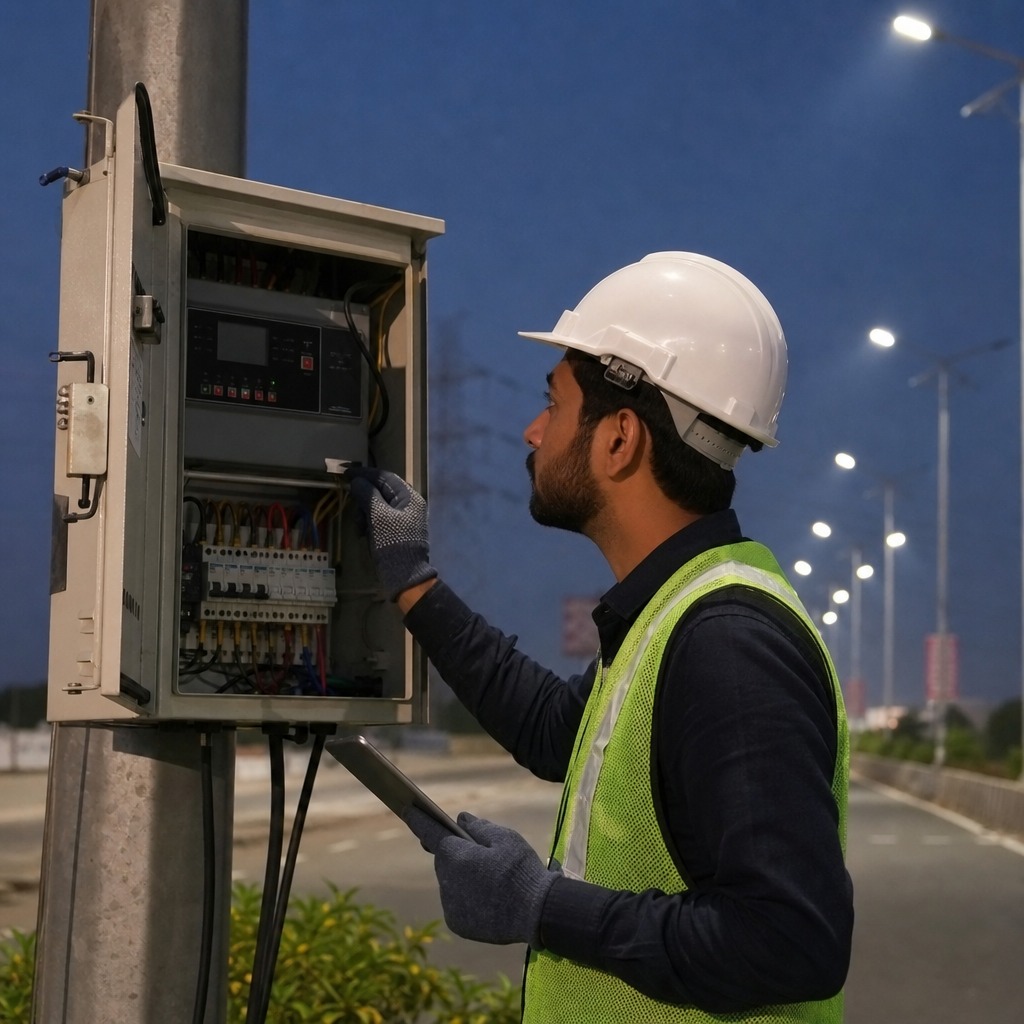
If you’re searching for an electrical control panel manufacturer in Nagpur, you’re probably dealing with one or more of these needs: better motor control, safe distribution, power-factor correction, reliable automation, or a compliant upgrade for an industrial/commercial setup. Control panels are not “one-size-fits-all”—the right design depends on your load, supply, protection philosophy, and operating conditions. This guide explains what electrical control panels do, the types commonly ordered in Nagpur, key specifications you should confirm, and mistakes to avoid—so you can make a confident decision. --- What Is an Electrical Control Panel (in Practical Terms)? An electrical control panel is an assembled system of electrical and electronic components housed in a cabinet/enclosure. It coordinates power flow and control signals to operate equipment safely and consistently. Depending on the application, a control panel may include: - Incoming protection (MCB/MCCB/ACB depending on rating) - Contactor starters for motors and loads - Relays (thermal overload relay, protection relays, interface relays) - Busbars and interconnections - Meters/indicators (current, voltage, energy, status lights) - Control wiring and terminals - Control logic (manual, relay-based, or PLC-based systems) - Alarm/feedback mechanisms for critical processes In short: it turns raw electrical supply into safe and controlled operation for your equipment. --- Why “Manufacturing Quality” Matters for Control Panels Many buyers assume any panel that “works” is good enough. But the performance of a control panel is affected by factors you can’t easily see from the outside: Key quality factors to check - Correct component selection (right ratings and proper make/spec) - Reliable wiring practices (proper crimping, ferrules, neat routing) - Heat management (ventilation, cable sizing, enclosure suitability) - Busbar design and current-carrying capacity - Tight terminal connections and proper torque practices - Testing before delivery (continuity, insulation resistance, functional checks) - Documentation (single line diagram, wiring diagram, test reports) A well-manufactured panel reduces: - downtime due to loose connections or thermal issues - recurring failures in contactors/relays - safety risks during operation --- Common Types of Panels People Order in Nagpur Depending on your requirement, you may see (or request) these panel categories: 1) APFC Panel (Automatic Power Factor Correction) Used to correct reactive power and improve power factor, especially in facilities with induction motors and continuous loads. Typical use cases - Industries with high motor load - Workshops and plants aiming to reduce electricity penalties - Places looking to improve system efficiency Important specs to verify - Number and rating of capacitor steps - Contactor/relay selection - Detuning/reactor consideration (to avoid resonance issues) - Control logic and protection for capacitors --- 2) MCC Panel (Motor Control Centre) A centralized panel for controlling multiple motors. Typical use cases - Pumps, HVAC motors, conveyors, and industrial load banks - Facilities needing structured motor starters and monitoring Important specs to verify - Starter types (DOL, star-delta, soft starter, VFD integration) - Individual motor protections and overload relays - Busbar sizing and distribution philosophy - Expandability for future motor additions --- 3) PDB Panel (Power Distribution Board / Panel) A distribution-oriented panel for distributing power to different circuits/load groups. Typical use cases - Buildings, plants, and substations - Feeding lighting circuits, socket circuits, or sub-panels Important specs to verify - Incoming and outgoing protection coordination - Neutral/earth management - Load segregation and labeling --- 4) AMF Panel (Auto Mains Failure) Used to automatically switch to a generator during mains failure. Typical use cases - Hospitals, data/IT setups, industrial control rooms - Any facility where downtime must be minimized Important specs to verify - Transfer mechanism logic and interlocks - Generator start/stop timing - Alarm and status indications - Synchronization handling (where required) --- 5) Street Light / Distribution / Feeder Panel Variants In municipal or infrastructure projects, panels support consistent street lighting control and feeder distribution. Typical use cases - Street lighting systems - Feeder pillars and DTC-style boxes (application depends on project design) - High mast lighting systems (control and protection) --- What Specifications Should You Confirm Before Buying? Whether you’re building a new facility or upgrading an existing one, ask the manufacturer about the following: 1) Electrical ratings - Voltage (e.g., 415V/440V/230V) - Current rating (main incomer and outgoing circuits) - Frequency (50 Hz typically in India) - Short-circuit withstand rating (where applicable) 2) Protection and coordination - Correct MCB/MCCB/ACB ratings - Overload relay settings for motors - Cable sizing and protection selectivity - Earth leakage/earth fault protection requirements (as applicable) 3) Control method - Manual control vs relay-based automation vs PLC/HMI integration - Sequence logic (especially for AMF/MCC/APFC) - Interlocks and safety shutdown logic 4) Enclosure and heat considerations - Suitable enclosure type and ingress protection approach - Ventilation/space for heat dissipation - Cable entry positions and gland selection 5) Testing and documentation A good panel process includes testing such as: - continuity checks - insulation resistance checks - functional verification for starters/logic - documentation like drawings and test reports (as per project needs) --- Installation, Commissioning, and Why It’s Part of “Panel Quality” Even a perfectly manufactured panel can fail prematurely if installation and commissioning are rushed. During commissioning, key focus areas include: - correct termination of all incoming/outgoing cables - verifying earthing/grounding continuity - checking insulation resistance and safe clearances - confirming relay settings and motor direction/sequence - functional testing under real load conditions (where feasible) If you’re coordinating a project in Nagpur, it helps to work with a team that understands both panel manufacturing and site commissioning workflow—especially for motor control, APFC, and feeder/lighting arrangements. --- Common Mistakes People Make When Choosing a Panel Mistake 1: Choosing only by cabinet size A bigger cabinet doesn’t guarantee better performance. What matters is internal design, thermal management, and protection coordination. Mistake 2: Ignoring future expansion If you want added motors/circuits later, ask about modularity and spare capacity. Mistake 3: Skipping documentation/testing Without diagrams and verification, troubleshooting becomes harder and compliance becomes messy. Mistake 4: Underestimating heat and dust exposure Industries and outdoor installations in different zones may require better enclosure suitability and internal spacing. --- Practical Guidance: How to Shortlist a Manufacturer in Nagpur When comparing vendors, you can evaluate them using these practical checkpoints: - Do they ask detailed questions about your load and operating conditions? - Can they provide a clear single line diagram / wiring approach (even at concept stage)? - Do they explain how they handle protection, interlocks, and testing? - Are components selected with correct ratings and coordination? - Can they support installation/commissioning timelines and site readiness? If you’re considering a local option, many project teams in Nagpur prefer working with an established panel manufacturer that can align manufacturing deliverables with site commissioning schedules—some suppliers in the region also handle related electrical works like street lighting and infrastructure cabling as part of project execution. --- Where a Local Panel Manufacturer Adds Value (Nagpur Context) In a city like Nagpur, procurement and project timelines can be affected by logistics, site readiness, and availability of components. A manufacturer that understands local execution—panel design, dispatch timelines, and on-site testing workflow—can reduce delays for: - industrial expansions - plant maintenance upgrades - municipal/infrastructure electrical improvements - control retrofits for aging switchgear --- Final Checklist Before You Place an Order Before signing off on an electrical control panel order, ensure you have clarity on: - Panel type (APFC, MCC, PDB, AMF, distribution/feeder, lighting control) - Ratings (voltage/current, motor HP/kW, capacitor steps, generator timing) - Protection strategy (breakers, overloads, selectivity) - Control logic & interlocks - Enclosure suitability (heat/dust/outdoor considerations) - Testing plan & documents - Installation/commissioning responsibility --- If you want, tell me your application details (panel type you need, voltage, number of motors/circuits, any generator requirement, and whether it’s indoor or outdoor). I can suggest a spec checklist you can use when discussing with an electrical control panel manufacturer in Na
2026-10-07T02:30:38


Submit Your Enquiry